This study investigates DOM dynamics during the late-summer bloom phase dominated by Phaeocystis antarctica in the Amundsen Sea Polynya. By integrating absorbance and fluorescence spectroscopy with FT-ICR-MS, we reveal unique DOM signatures including protein-rich chromophoric DOM with distinct absorbance shoulders, elevated protein-like fluorescent DOM components linked to P. antarctica degradation, and enrichment of labile low-molecular-weight compounds with increased sulfur-containing molecules from DMSP oxidation.
Using metatranscriptomics, this study investigated bacterioplankton gene expression in surface waters across a nearshore-to-offshore transect in Lake Michigan during 2017–2018. Results imply that offshore bacterial communities are more substrate-limited than in nearshore and are investing more energy in acquiring DOM substrates.
Variations in DOM properties between porewater and creek water during tidal cycles were investigated during summer and autumn in a macrotidal saltmarsh, Hangzhou Bay, China, using flow field-flow fractionation combined with fluorescence EEM-PARAFAC. This study emphasized the compositional and molecular size dynamics of DOM over tidal cycles at the tidal marsh-estuarine margins of a river-dominated estuary.
This study compared dissolved organic matter across the lower Mississippi River and Pearl River using monthly water samples. The Mississippi exhibited lower carbon concentrations with minimal seasonal shifts, while the Pearl River showed higher concentrations driven by terrestrial runoff and distinct seasonal patterns. High-molecular-weight fractions displayed unique optical signatures, and major flood events increased organic material pulses.
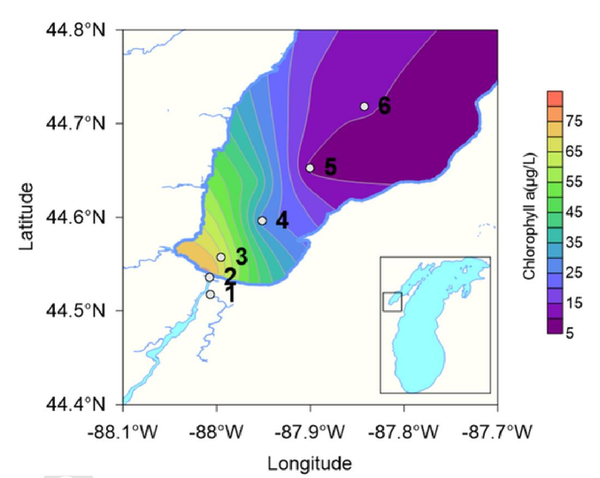
Variations in molecular weight distributions of dissolved organic matter (DOM) and PARAFAC-derived fluorescent components were investigated along a transect in the seasonally hypereutrophic lower Fox River-Green Bay using the one-sample PARAFAC approach coupling flow field-flow fractionation for size-separation with fluorescence excitation-emission matrix (EEM) and PARAFAC analysis.
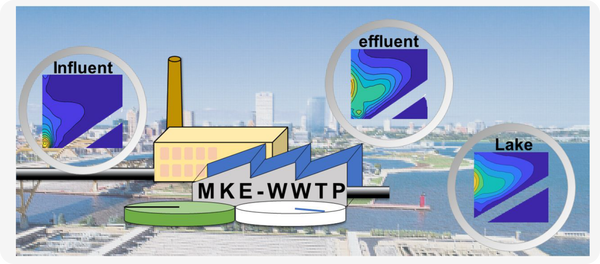
Dynamic changes in the abundance, composition, and size spectra of dissolved organic matter (DOM) in different size-fractions between influent and effluent from Milwaukee metropolitan wastewater treatment plants (WWTPs) were evaluated using size-fractionation, excitation-emission matrix (EEM) coupled with parallel factor analysis (PARAFAC), and ΔEEM approaches.